Live Butterfly & Moth Care Guide
🦋 Live Butterfly & Moth Care Guide
Welcome! Thank you for your order from JMZ Butterfly Farm. This guide will walk you through everything you need to know to care for your live specimens. BUT FIRST - use code: JMZ15 for 15% off your next order, come back and shop for an even better price!! Whether you received caterpillars, chrysalis, cocoons, pupae, or eggs — we've got you covered. Take a deep breath, you've got this!
🐛 Section 1: Caterpillars
Upon Arrival
- Open your package in a calm, indoor space away from direct sunlight
- Inspect each caterpillar gently — some may be still due to shipping stress (this is normal)
- Do not handle caterpillars with bare hands if possible — use a soft paintbrush to move them
Housing / Container Setup
- Use a well-ventilated container (mesh enclosure or deli cup with holes)
- Line the bottom with a paper towel for easy cleaning
- Keep the enclosure clean — remove frass (droppings) daily
Feeding
- Provide fresh host plant leaves specific to your species
- Replace food daily or when wilted
- Never use plants treated with pesticides
Temperature Range
- Keep between 70–85°F (21–29°C)
- Avoid drafts, air conditioning vents, and direct sunlight
What to Expect
- Caterpillars will eat, grow, and molt (shed skin) several times
- When ready to pupate, they will stop eating and become restless — this is normal!
- They will form a chrysalis (butterflies) or spin a cocoon (moths)
Section 2: Chrysalis & Moth Cocoons (Pupae)
Upon Arrival
- Handle with extreme care — do not shake or drop
- If a chrysalis appears dented but is still firm, it is likely fine
- Soft or leaking pupae may not be viable — contact us immediately
Housing / Setup
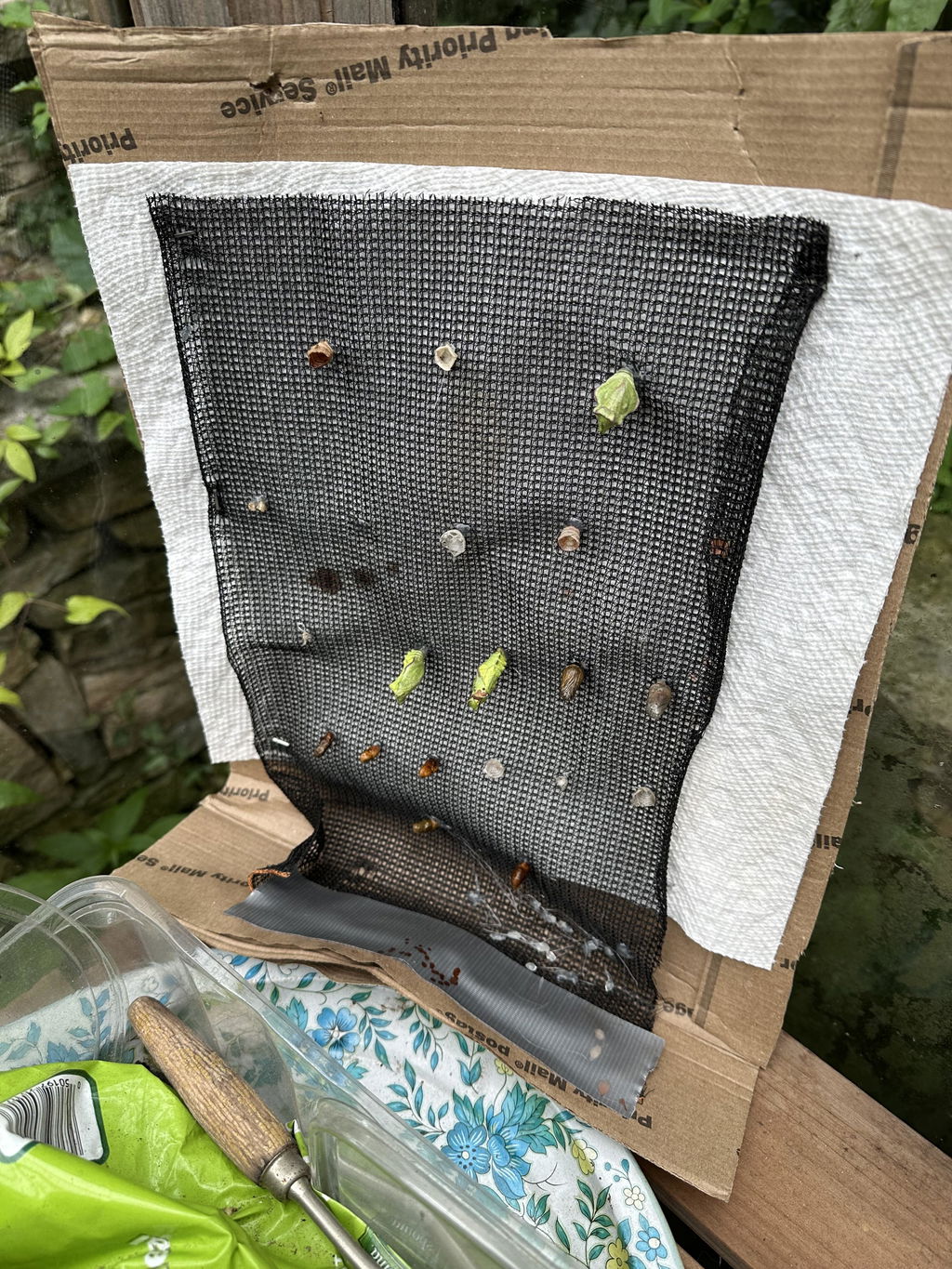
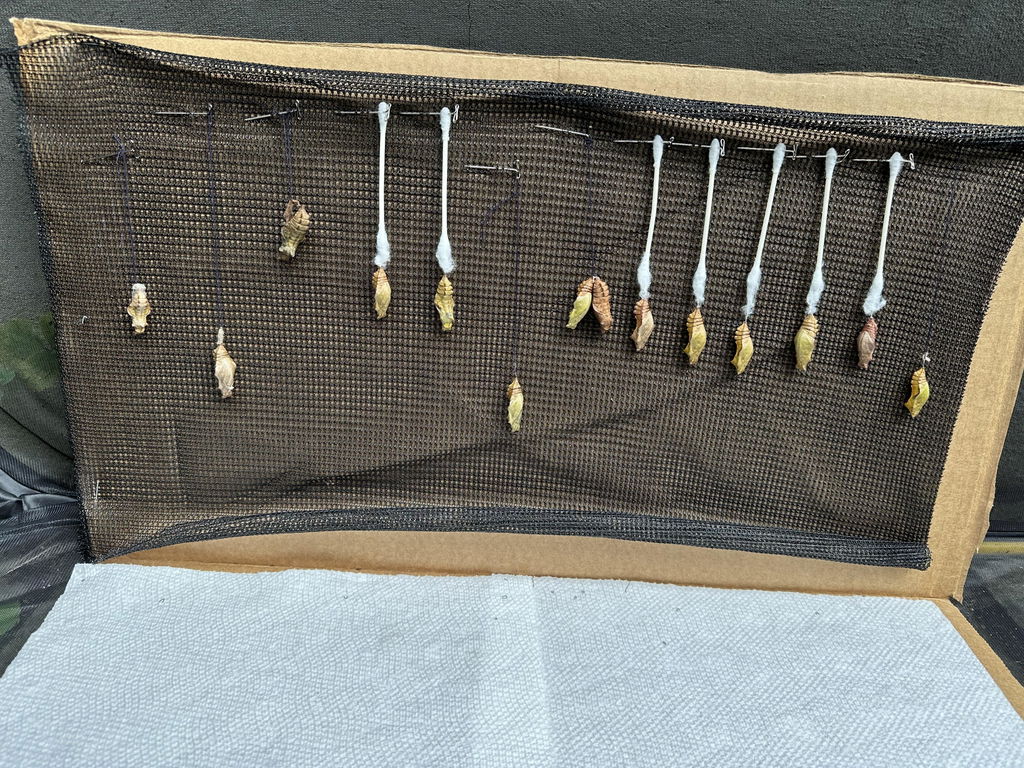
- Hang chrysalis upright using a small piece of tape or pin at the top — do not glue the body
- Place cocoons in a ventilated container with paper towel on the bottom
- Leave plenty of vertical space for wings to expand upon emergence
Humidity Needs
- Butterfly chrysalis: Moderate humidity (50–70%) — lightly mist the sides of the enclosure every 1–2 days
- Moth cocoons: Slightly higher humidity (60–80%) — mist more regularly but avoid soaking the cocoon
Temperature Range
- Keep between 70–82°F (21–28°C)
What to Expect During Emergence
- The chrysalis will darken and become transparent just before emergence
- Emergence typically takes 10–21 days depending on species and temperature
- Do not assist the butterfly or moth out — this process strengthens their wings
- After emergence, allow 2–4 hours for wings to fully dry before handling
🥚 Section 3: Moth Eggs
Upon Arrival
- Eggs are very small and delicate — handle the container, not the eggs themselves
- Keep in a warm, stable environment immediately upon arrival
- DO NOT ADD FOOD TO THE CONTAINER UNTIL THE EGGS HATCH!!! THIS WILL KILL YOUR EGGS AND WE WILL NOT REPLACE THEM!
Housing
- Keep eggs in a small ventilated container or deli cup
- Line with a paper towel or leaf from the host plant
Humidity
- Maintain 60–75% humidity
- Lightly mist the sides of the container (not directly on eggs) every 1–2 days
Temperature Range
- Keep between 72–82°F (22–28°C)
What to Expect
- Eggs typically hatch within 5–14 days depending on species and temperature
- Newly hatched caterpillars (first instars) are tiny — provide finely shredded host plant leaves
- Move caterpillars to a larger enclosure as they grow
🌿 Section 4: General Tips
- Host plants matter: Each species requires a specific host plant — research your species before feeding
- Keep it clean: Remove frass, dead leaves, and shed skins daily to prevent mold and disease
- No pesticides: Never use plants from garden centers unless you are certain they are pesticide-free
- Observe daily: Check on your specimens every day — early detection of issues saves lives!
- Avoid overcrowding: Give each specimen enough space to move, feed, and develop
❓ FAQ / Troubleshooting
Why isn't my caterpillar moving?
Caterpillars often become still before molting or pupating. Wait 24 hours — if there is no change and it appears shriveled or discolored, contact us.
My chrysalis fell — what do I do?
Carefully re-hang it using a small piece of tape at the very top (cremaster). Do not glue the body of the chrysalis.
The butterfly/moth emerged but its wings look crumpled.
This can happen if the enclosure didn't have enough vertical space or if it was disturbed during emergence. Unfortunately, wing deformities are usually permanent.
I see mold in my container.
Remove the affected material immediately, clean the container, and increase ventilation. Reduce misting frequency.
✅ Live Arrival Guarantee
JMZ Butterfly Farm guarantees that all specimens arrive alive and healthy. If any specimens arrive DOA (dead on arrival), customers must photograph the specimens immediately upon opening the package and contact us within 2 hours of delivery for a replacement or store credit.
📧 Contact us through our website or reply to your order confirmation email.
— JMZ Butterfly Farm | Ethically Bred, Carefully Shipped 🦋 —